

What Actually Happens on a Stu Brown Photography Workshop?

North Yorkshire and North East Photography Workshops
Booking a photography workshop can feel like quite a big step, particularly if you’re still learning how your camera works or you’ve never attended anything like it before. You might wonder whether everyone else will have more experience, whether your camera is good enough or whether you’ll understand everything being discussed. These are completely natural concerns, but the reality of one of my workshops is far more relaxed and friendly than many people expect.
My photography workshops are designed to help ordinary people enjoy their cameras and become more confident with their photography. You don’t need to know all the technical terms, own professional equipment or arrive with years of experience behind you. Some students have only recently bought their first camera, while others have enjoyed photography for years but want help developing particular skills. Everyone arrives at a slightly different point, and that is absolutely fine.
A Relaxed Beginning to the Workshop
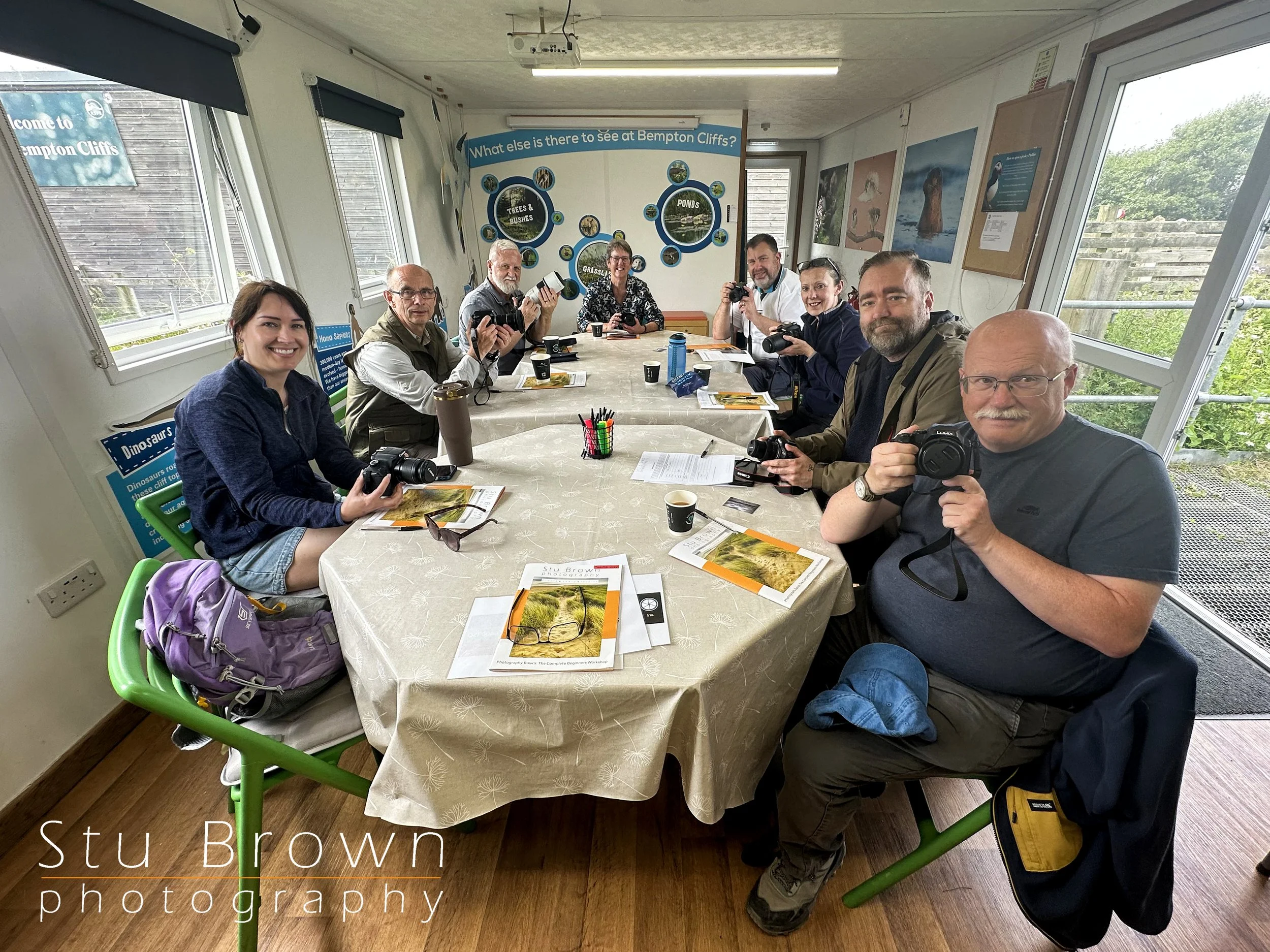
Every workshop begins with a friendly introduction and a chance for everyone to settle in. I’m normally at the location a little early so nobody feels rushed when they arrive, and we take some time to talk about the day, the location and what each person would most like to gain from the experience.
I also find out what cameras people are using and how comfortable they currently feel with them. A group might include Canon, Nikon, Sony, Fujifilm, Olympus and Panasonic users, as well as a mixture of DSLR and mirrorless cameras. The buttons and menus may be in different places, but the principles of photography remain the same, and I work with each student using the camera they already own.
There is no test and nobody is placed on the spot. The purpose of the introduction is simply to help me understand the group and make sure the tuition is useful for the people who are actually there, rather than delivering exactly the same rigid lesson regardless of their experience.
Learning Without Unnecessary Jargon
Photography can be made to sound far more complicated than it needs to be. Camera manuals often assume that you already understand the terminology, while online videos can move quickly from one technical subject to another without explaining how everything fits together.
My approach is to explain photography in straightforward language and relate it to the photographs we are trying to create. We look at the camera controls and principles that are relevant to that particular workshop, but the emphasis is always on understanding why something matters rather than memorising a collection of numbers.
If something doesn’t make sense the first time, we approach it in another way. Everyone learns differently, and there is never any embarrassment in asking a question or requesting another explanation. In fact, the question one student is hesitant to ask is often the same thing several other people in the group are wondering about.
North Yorkshire and North East Photography Workshops
Practical Photography Is at the Heart of the Day
Although some workshops include an indoor or classroom element, the day is not spent simply sitting and listening to me talk. Photography is a practical subject, and the best way to understand your camera is to use it.
Once we have covered the foundations needed for the session, we begin taking photographs and applying them in a real situation. This is where the information starts to make more sense because you can see how the camera responds, compare different results and begin making decisions for yourself.
I move around the group throughout the practical session, helping with camera controls, focusing, exposure, composition and any difficulties that arise. I can also look at the photographs you are taking and offer immediate guidance while the subject, lighting and situation are still in front of us.
This individual help is an important part of every Stu Brown Photography workshop. Although you are learning alongside other photographers, you are not left struggling quietly at the back of the group. I make sure everyone receives support and has opportunities to ask questions throughout the day.
Workshops Designed Around the Subject
Each genre of photography presents different challenges, so the experience changes depending on the workshop you choose. My Photography Workshops for Beginners concentrate on helping students understand their cameras and build a strong foundation, while Wildlife Photography Workshops explore the particular demands of photographing living subjects in changing conditions.
Landscape Photography Workshops allow us to slow down, study the location and think more carefully about light and composition. Night Photography Workshops introduce a completely different way of seeing familiar places, using the atmosphere, colour and creative possibilities that appear after daylight has disappeared.
The detailed tuition and practical exercises are kept within the workshops because they work best when I can demonstrate them properly and help students apply them to their own cameras. However, every workshop shares the same relaxed approach, with clear explanations, practical experience and individual guidance at its heart.
North Yorkshire and North East Photography Workshops
Learning in Brilliant Photography Locations
The location is much more than somewhere to hold the workshop. It becomes part of the learning experience and gives students genuine photographic opportunities throughout the day.
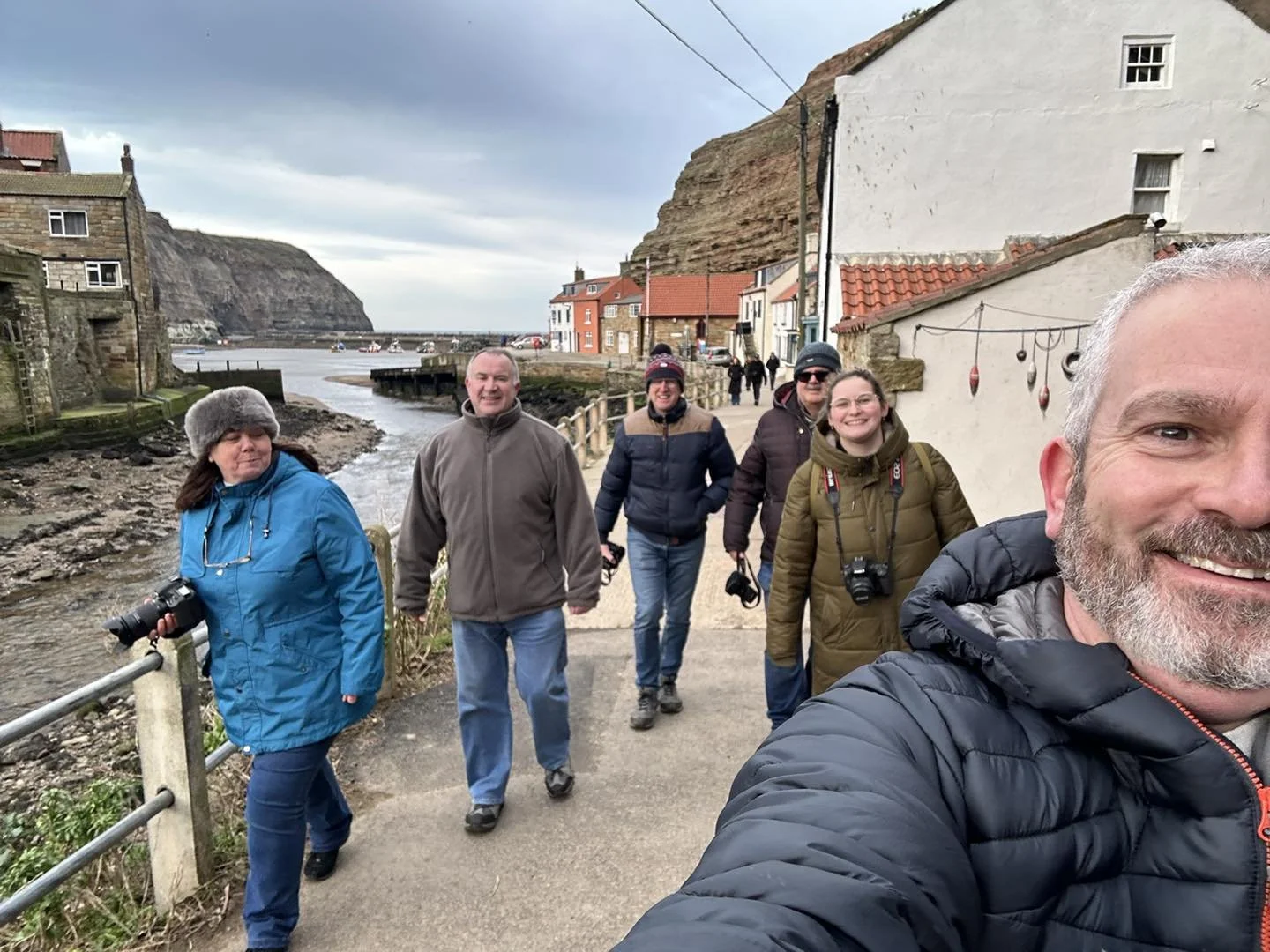
My workshops take place at carefully selected locations across North Yorkshire and the North East, including some fantastic RSPB nature reserves and areas of countryside and coastline. Locations such as RSPB Bempton Cliffs and RSPB Saltholme offer completely different subjects and conditions, helping students learn how to respond to the environment rather than relying on one set of camera settings.
A wildlife reserve naturally gives us opportunities to discuss responsible wildlife photography and fieldcraft, while a coastal or landscape location encourages us to consider light, weather, foregrounds and the way different elements work together within the frame. At night, familiar streets and buildings can take on a completely different character as artificial light becomes part of the photograph.
Working in real locations means conditions will sometimes change, subjects may move and the light may not behave exactly as expected. That isn’t a problem to work around; it is an important part of learning photography. It helps students understand how to make decisions when the world doesn’t conveniently remain still.
You Don’t Need Expensive Equipment
One of the most common worries before attending a workshop is whether a camera or lens will be good enough. The short answer is that you do not need the latest or most expensive equipment to learn photography.
The best camera for your workshop is usually the one you already own. Learning how to use it properly will often make a far greater difference than buying more equipment without understanding what you genuinely need.
The requirements can vary depending on the subject, and each individual workshop page explains if something such as a tripod or longer lens would be useful. I try to be realistic about equipment and will never make somebody feel that their photography is being held back simply because they don’t own the newest camera.
A Friendly Group with Mixed Experience
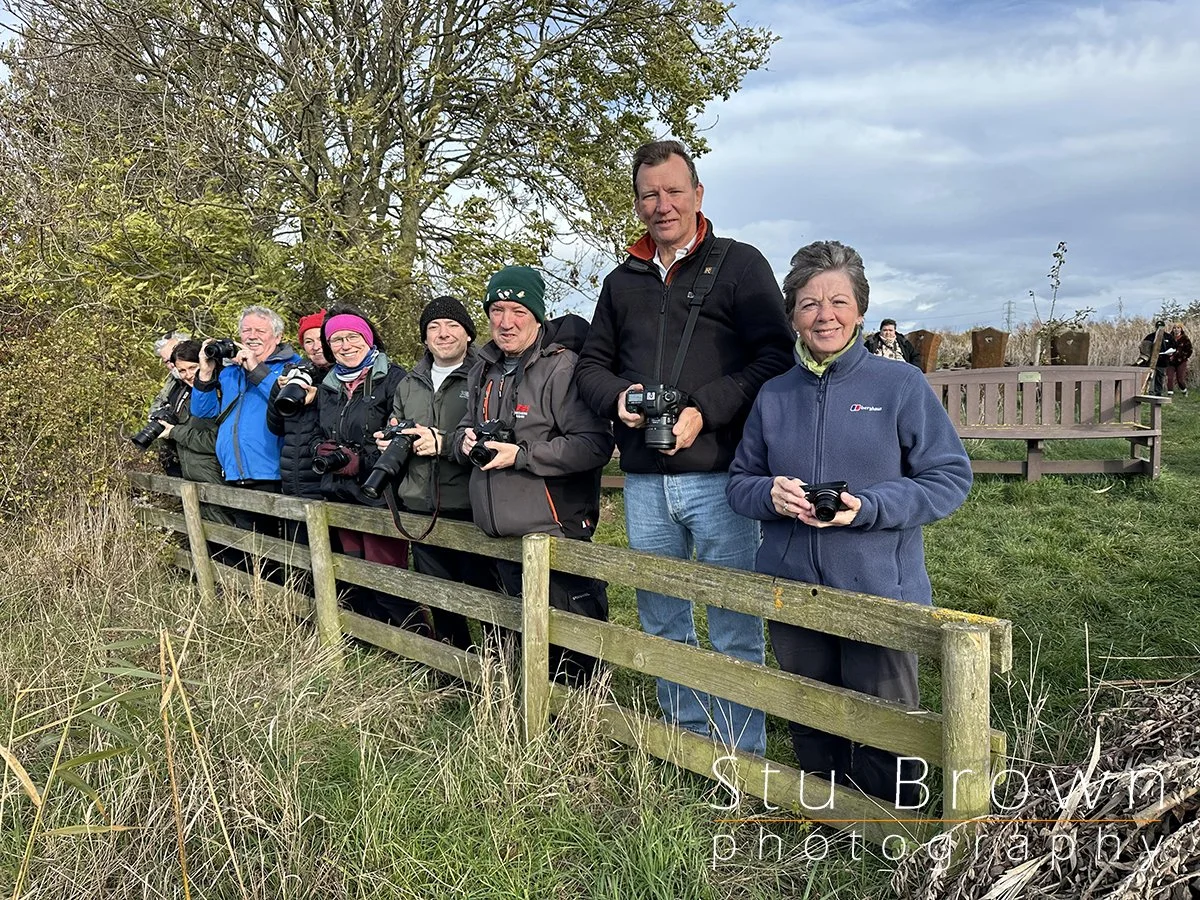
People often arrive at a workshop on their own, but the atmosphere quickly becomes sociable. Everyone shares an interest in photography, and it doesn’t usually take long before people are comparing cameras, sharing experiences and talking about the subjects they enjoy photographing.
A mixture of experience can actually add something valuable to the day. Beginners realise they aren’t alone in finding certain things confusing, while more experienced photographers can concentrate on improving particular areas of their work. My responsibility is to make sure the tuition remains accessible and that every student gains something useful from attending.
There is no competition and nobody is expected to produce the best photograph of the day. The aim is to learn, experiment and enjoy photography in good company. Some students arrive feeling nervous about their ability and leave not only understanding their camera better, but also feeling much more comfortable calling themselves a photographer.
Photography as Time for Yourself
Photography workshops are about developing practical skills, but there is another side to them that matters just as much. Photography gives us a reason to slow down, concentrate on what is in front of us and temporarily step away from the usual pressures of everyday life.
Spending a day outdoors with a camera can be wonderfully absorbing. You begin noticing changes in the light, small details within the landscape and wildlife behaviour that might otherwise have passed unnoticed. The act of looking for photographs encourages us to be present in the moment, which is one of the reasons photography can have such a positive effect on our wellbeing.
I want students to leave with better camera skills, but I also want them to have enjoyed the experience. Learning becomes much easier when people feel relaxed, supported and able to be creative without worrying about getting everything perfect.
North Yorkshire and North East Photography Workshops
A Workshop Guide to Take Home
A full workshop contains a lot of new information, and it would be unrealistic to expect students to remember everything immediately. That is why participants receive a professionally produced Stu Brown Photography workshop guide to take home.
The guide supports the subjects covered during the day and gives students something useful to revisit afterwards. It means you can concentrate on listening, experimenting and taking photographs during the workshop rather than trying to write down every explanation.
Continuing to practise after the session is important, and the guide helps reinforce what you have learned when you are back out with your camera. It becomes a useful reminder of the workshop and a reference you can return to as your photography develops.
What Happens After the Workshop?
The workshop may finish at a particular time, but the benefits should continue long afterwards. The aim is for you to leave understanding not only what you changed on the camera, but why you changed it and how you might approach a similar situation in the future.
You may not remember every detail immediately, and nobody should expect to master photography in a single day. What you should have is a much clearer foundation, greater confidence and the motivation to keep using your camera.
Many students begin noticing a difference simply because they are thinking more carefully before taking a photograph. They start recognising situations where they might want to change a setting, alter their position or wait for the light to improve. That developing thought process is far more valuable than leaving with one successful image created by copying somebody else’s settings.
Choosing the Right Photography Workshop
If you are completely new to photography or still rely heavily on Auto, one of my Photography Workshops for Beginners is an ideal place to start. If you already understand the foundations and want to concentrate on a particular subject, you may prefer a Wildlife, Landscape or Night Photography Workshop.
For people who would benefit from tuition tailored entirely around their own camera, experience and interests, I also offer One-to-One Photography Workshops. These provide more time to explore individual questions and can be planned around the areas of photography you most want to develop.
Whichever workshop you choose, you can expect a friendly welcome, straightforward explanations, practical photography and plenty of individual support. You don’t need to arrive knowing everything because learning is the entire reason for being there.
Join Me on a Photography Workshop
If you have been thinking about attending a photography workshop but have worried that you aren’t experienced enough, I hope this has reassured you. My workshops are created for real people with different cameras, different abilities and different reasons for wanting to improve.
You can explore my upcoming Photography Workshops across North Yorkshire and the North East, including beginner, wildlife, landscape and night photography sessions. Choose the subject that interests you, bring the camera you already own and come prepared for a relaxed, practical and enjoyable day of photography.
The most important thing is not how much you know when you arrive. It is how much more confident, inspired and enthusiastic you feel when you leave.
To book or to check availability - Call | Text | WhatsApp - 07739121743 | Email