

What Should I Bring to a Photography Workshop — and What Don’t I Need?
One of the questions I’m regularly asked before a photography workshop is what somebody needs to bring with them. It’s usually followed by a slightly nervous explanation about their camera being quite old, not having many lenses or worrying that everybody else will arrive with much more professional equipment.
The honest answer is that you probably already own most of what you need. My photography workshops aren’t equipment competitions, and nobody is judged by the name on their camera or the size of their lens. They are relaxed, practical learning experiences designed to help you understand the equipment you already have and become more confident using it.
Bring the Camera You Already Own
The most important thing to bring is your own camera. It doesn’t need to be the newest model, and you certainly don’t need to buy another one before attending. Students arrive with all kinds of equipment, including Canon, Nikon, Sony, Fujifilm, Olympus and Panasonic cameras, as well as a mixture of DSLR and mirrorless systems.
Learning with your own camera is important because it allows us to find the controls and settings you will continue using after the workshop. Although the underlying principles of photography are the same, different manufacturers arrange their buttons and menus in different ways. Working with your own equipment means the tuition is immediately relevant and you won’t have to translate everything from somebody else’s camera when you get home.
If you have only recently bought your camera and barely know how to switch it out of Auto, that is absolutely fine. You are not expected to arrive already understanding it because learning how to use it is one of the reasons for attending.
Make Sure Your Battery Is Charged
A fully charged battery is one of the simplest but most important things to remember. Photography workshops involve using the camera regularly throughout the day, reviewing photographs and sometimes spending more time exploring menus than you normally would, so the battery may work harder than expected.
If you own a spare battery, bring that along as well, but don’t feel that you need to purchase one specifically for the workshop. Starting the day with a fully charged battery is normally enough for most cameras and sessions.
It is also worth checking that there is a memory card in the camera and that it has plenty of available space. You don’t want to discover after arriving that the card is still sitting in the computer at home or is completely full of photographs from your last outing. These things happen more often than photographers like to admit, including experienced ones.
Which Lens Should I Bring?
If your camera came with a standard kit lens, that may be all you need for a Photography Workshop for Beginners. A lens covering a useful everyday range gives you plenty of opportunities to practise and understand what your camera can do without constantly changing equipment.
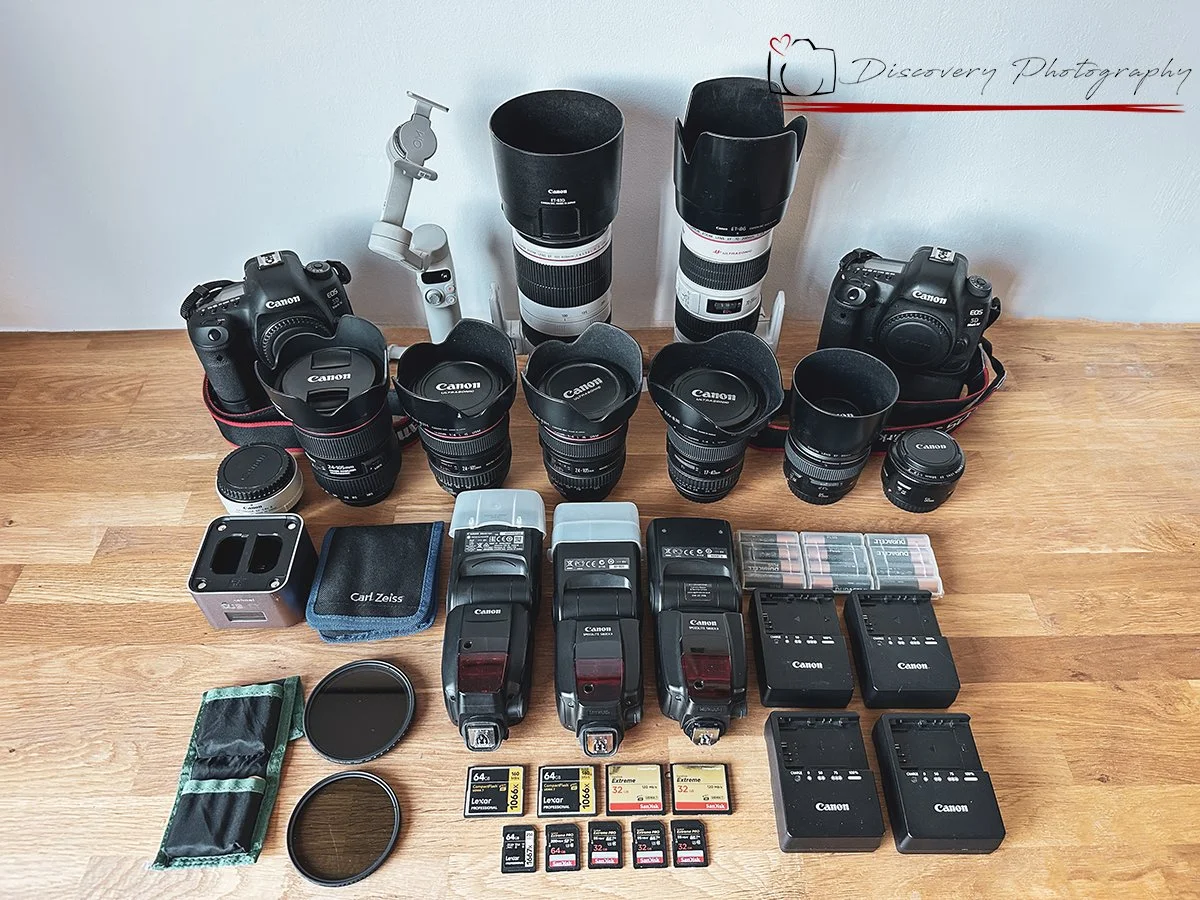
If you already own several lenses, you’re welcome to bring them, but you don’t necessarily need to carry your entire camera bag. The individual workshop page will explain if a particular type of lens would be helpful for the subject we’ll be photographing.
A longer lens can be useful on a Wildlife Photography Workshop because it allows you to photograph subjects from a respectful distance. A wider or standard lens may be more suitable for a Landscape Photography Workshop, although landscapes certainly aren’t restricted to one particular focal length. The important thing is to bring the best option you already own rather than feeling that you must buy something new.
If you’re unsure which lens would be most suitable, you can always contact me before the workshop. I would much rather help you choose from the equipment you already have than see you spend money unnecessarily.
Will I Need a Tripod?
Whether you need a tripod depends on the workshop. For a beginner session held mainly during daylight, a tripod may not be necessary unless the individual workshop information says otherwise.
For Night Photography Workshops, a sturdy tripod is normally essential because we may be working with longer exposures that cannot be held steadily by hand. Tripods can also be useful for certain kinds of landscape photography, particularly when the light begins to fade or when we want to work more carefully with composition.
Every workshop listing explains the equipment that will be useful for that particular session. If a tripod is required, I will make that clear before you book so there are no surprises when you arrive.

Dress for the Location Rather Than the Photograph
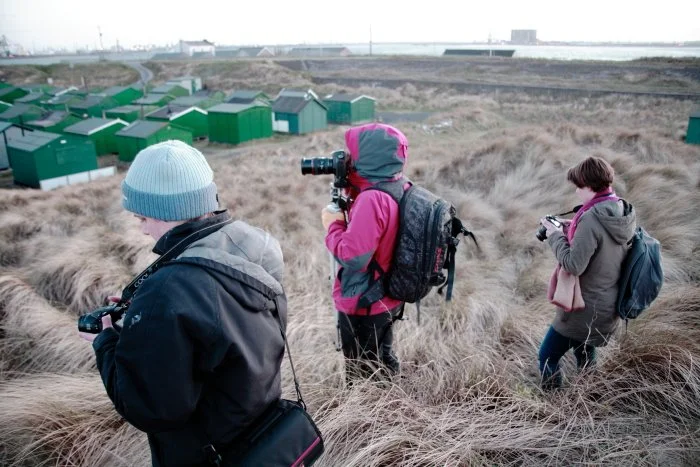
Many of my group photography workshops take place outdoors at locations across North Yorkshire and the North East, including nature reserves, coastal areas and countryside locations. Comfortable clothing and sensible footwear can make a huge difference to how much you enjoy the day.
British weather has a habit of changing its mind, particularly around the coast, so it is worth checking the forecast and arriving prepared for the conditions. Layers are often more useful than one heavy coat because you can adjust them as the temperature changes. A waterproof jacket is always useful when there is a chance of rain, while a hat, sun protection and drinking water may be more important during warmer weather.
For workshops at locations such as RSPB Bempton Cliffs or RSPB Saltholme, it is worth remembering that the wind can make conditions feel much colder than the temperature suggests. You don’t need specialist outdoor clothing, but you do need to feel comfortable enough to concentrate on your photography rather than counting the minutes until you can return to the car.
The individual event page will always explain anything particularly important about the location, accessibility or likely conditions.
Bring Your Questions
You don’t need to arrive with a notebook full of technical questions, but if there is something about your camera that has been confusing you, make a note of it before the workshop. It might be a button you’ve never understood, a setting you’re frightened of changing or a type of photograph that never seems to work as expected.
Questions often arise naturally as the workshop progresses, and you will have plenty of opportunities to ask them. There is no such thing as a silly question, and you will often find that somebody else in the group has been wondering exactly the same thing.
My job is not to overwhelm you with jargon or demonstrate how much technical information I know. It is to listen to what you need help with, explain it clearly and give you the opportunity to try it for yourself.
What Don’t You Need?
You don’t need a professional camera, an enormous collection of lenses or the latest equipment. You don’t need to understand manual exposure before arriving, and you don’t need to know the difference between every setting in the camera menu.
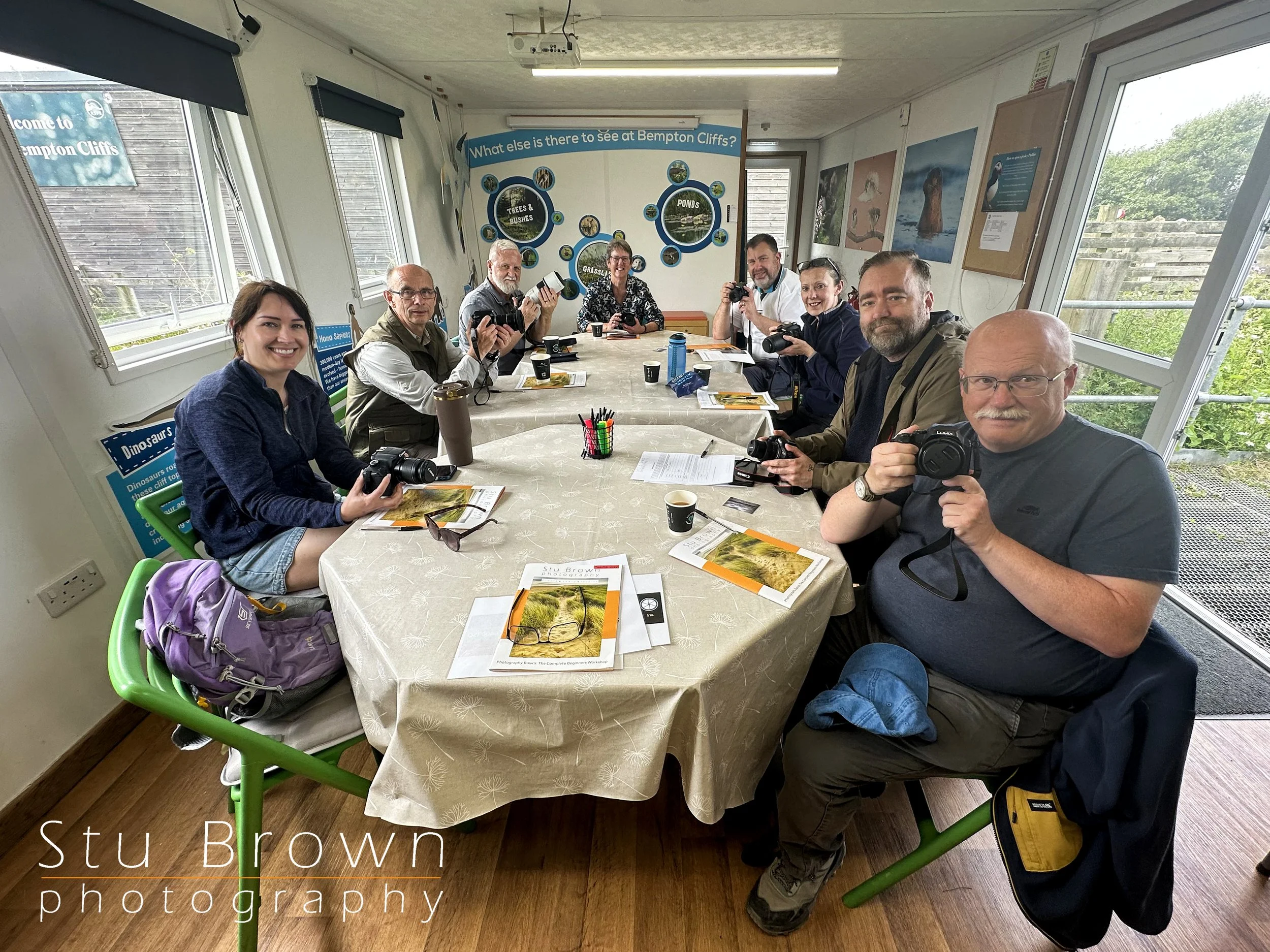
You also don’t need to worry about whether the other students will be better than you. My workshops attract people with different cameras, different interests and different levels of experience. Some are taking their first steps away from Auto, while others already understand the basics but want to improve a particular area of their photography.
The workshop isn’t a competition to see who creates the best photograph. It is a supportive place to learn, experiment and enjoy using your camera. Everyone progresses at their own pace, and I work around the group to provide individual help throughout the session.
Most importantly, you don’t need to arrive feeling completely confident. Building that confidence is one of the main reasons the workshops exist.
What Will I Take Home?
You will obviously take home the photographs you create during the workshop, but I want the experience to provide something more lasting than a collection of images from one day.
The aim is for you to leave with a clearer understanding of your camera, greater confidence in making your own decisions and the enthusiasm to continue practising. Rather than simply copying a setting that worked in one particular situation, you should begin understanding why a choice was made and how you might respond when the conditions change.
Students also receive a professionally produced Stu Brown Photography workshop guide to take home. This supports the subjects covered during the session and gives you something useful to revisit afterwards, so you don’t have to worry about remembering every explanation immediately.
Check the Individual Workshop Information
The exact requirements will vary between a beginner, wildlife, landscape or night photography workshop, so always read the individual event page before attending. That page will explain the location, timings and any equipment that is particularly important for the session.
If anything remains unclear, just ask me. I’m always happy to help before the workshop, especially if it prevents somebody worrying unnecessarily or buying equipment they don’t actually need.
Come as You Are
Preparing for a photography workshop really doesn’t need to be complicated. Bring your camera with a charged battery and a memory card, dress comfortably for the location and arrive ready to learn. Anything more specialised will be explained on the individual workshop page.
You don’t need the best equipment in the group, and you don’t need to prove that you already understand photography. Bring the camera you have, the questions you want answered and a willingness to try something new.
My Photography Workshops for Beginners, Wildlife Photography Workshops, Landscape Photography Workshops and Night Photography Workshops take place at a variety of locations across North Yorkshire and the North East. One-to-One Photography Tuition is also available if you would prefer a session designed entirely around you, your camera and what you want to achieve.
Whichever option you choose, you can expect a friendly welcome, practical tuition and plenty of individual support. The equipment gets you through the door, but it is the understanding and confidence you develop during the workshop that will make the greatest difference to your photography.
To book or to check availability - Call | Text | WhatsApp - 07739121743 | Email