

Teaching Photography Basics at RSPB Saltholme
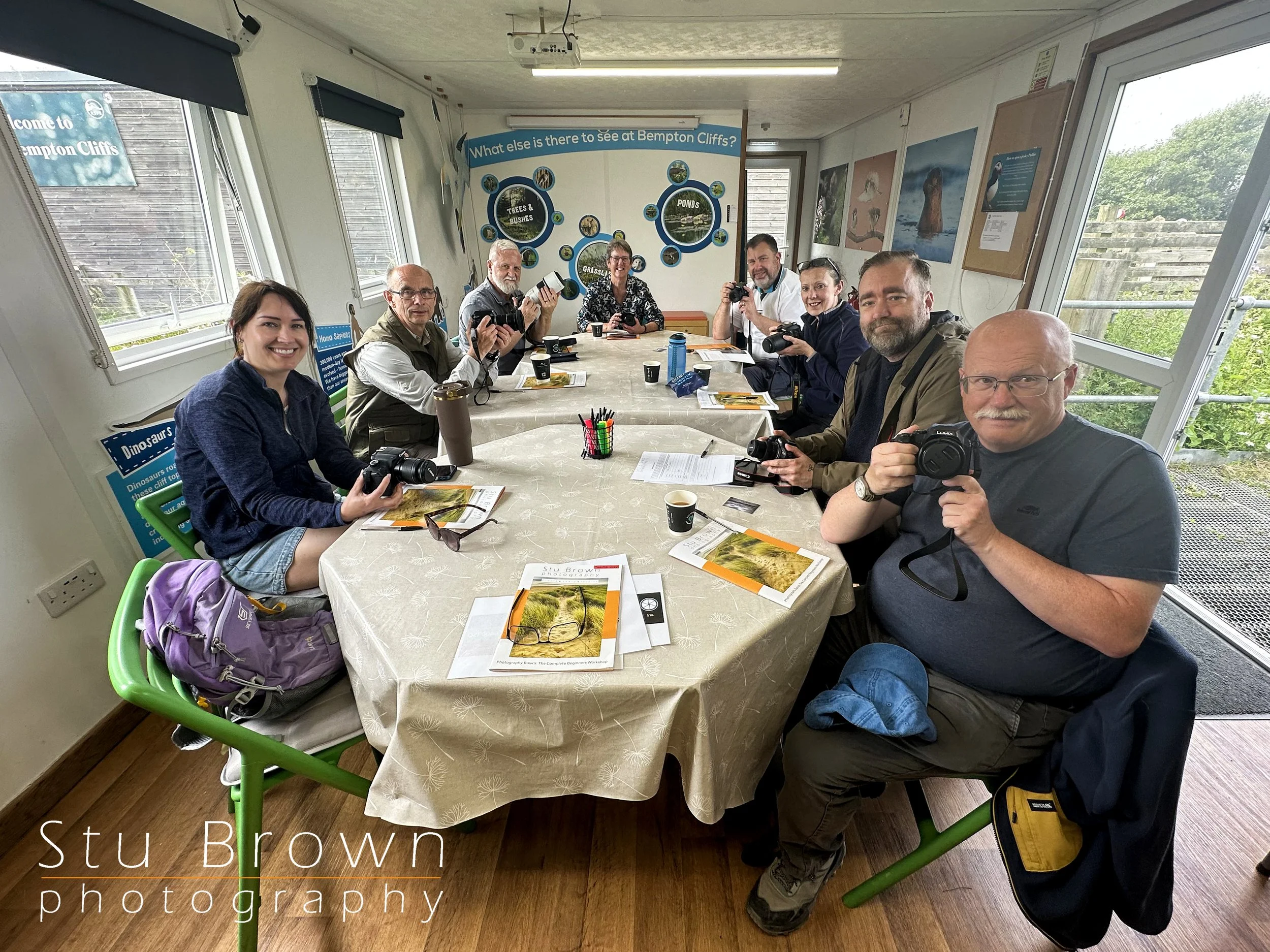
Yesterday I was back at RSPB Saltholme teaching another of my Photography Basics: The Complete Beginners Workshops, and it turned into exactly the kind of day I enjoy most.
Everyone arrived with different cameras, different levels of experience and, as is often the case, a few questions about buttons and settings that had never quite made sense before. Some had been relying heavily on Auto mode, while others understood bits and pieces but wanted everything brought together in a way that felt clear and manageable.
That is really what these beginner photography workshops are all about.
Photography can appear far more complicated than it needs to be. Cameras arrive with thick instruction manuals, endless menus and buttons that seem determined to confuse you. Then you go online and find people discussing technical details in a language that feels impossible to follow.
My aim is to strip all of that back.
We began indoors at the visitor centre, working through the foundations of photography without drowning everyone in unnecessary jargon. We looked at how aperture, shutter speed and ISO work together, why photographs sometimes turn out too bright or too dark, and how changing one camera setting can completely alter the final image.
There is always a moment during these workshops when something suddenly clicks. A setting that has seemed confusing for years begins to make sense because it has been explained in a practical way rather than simply read from a manual.
Once we had covered the basics, it was time to take the cameras outside and put everything into practice around the reserve.
That is where RSPB Saltholme really comes into its own as a location for learning photography. There is always something to point a camera towards, whether that is a bird hiding among the reeds, the changing light across the water, flowers beside the paths or the smaller details that most people would normally walk straight past.
You do not need a rare bird or an enormous telephoto lens to create a photograph worth keeping.
A large part of learning photography is simply learning how to look.
It is about noticing how the light falls across a subject, changing your position to improve the background and thinking about what you include within the frame. Sometimes moving a few steps to one side or lowering the camera slightly makes a much bigger difference than buying another piece of equipment.
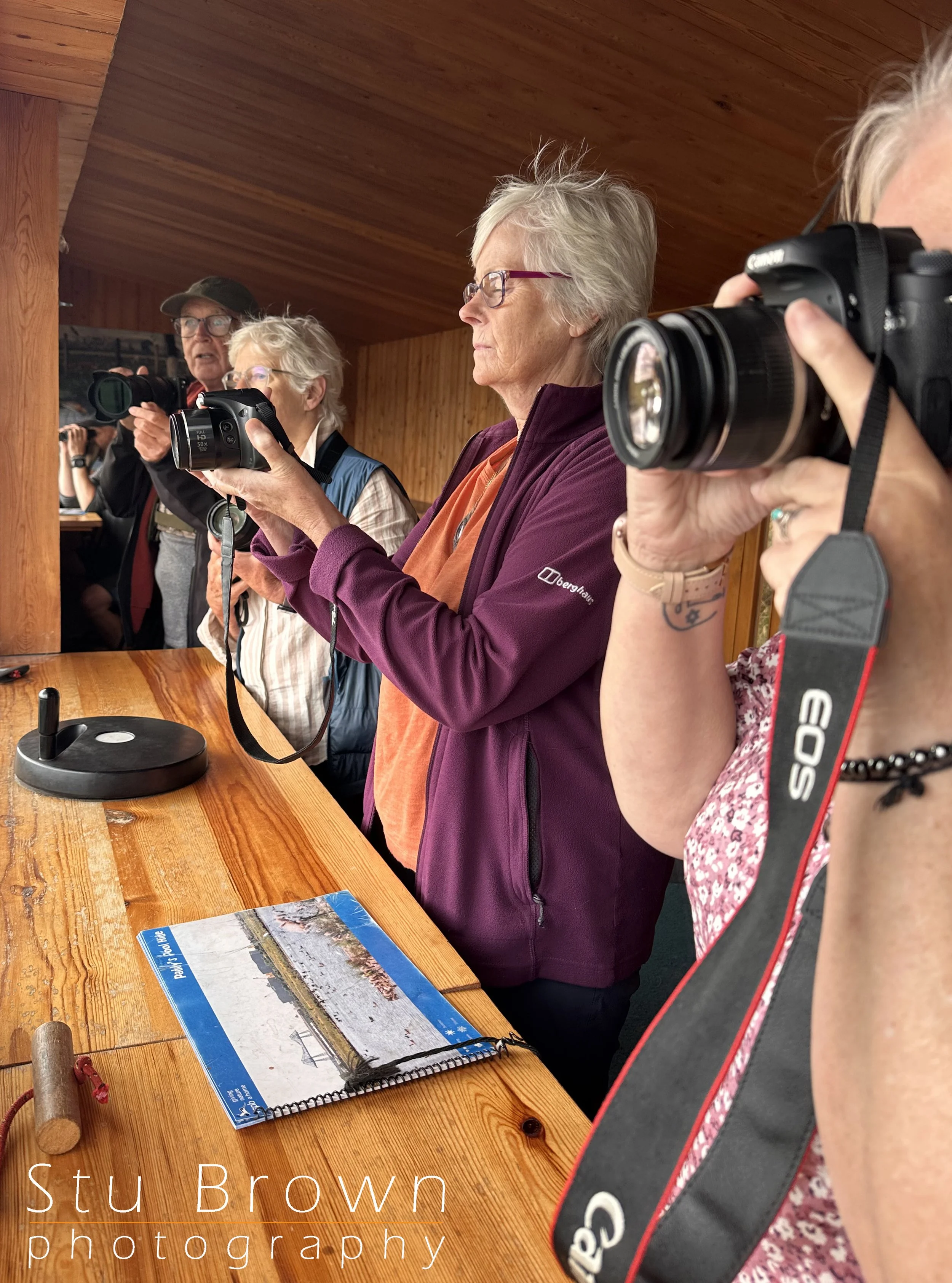
As we walked around the reserve, everyone had the opportunity to experiment with their own camera while I was nearby to answer questions, check settings and explain why something was or was not working. That practical part of the day is incredibly important because photography makes much more sense once you can immediately see the effect of the choices you are making.
It was lovely watching confidence grow throughout the workshop.
At the beginning of the day, people can sometimes be hesitant about changing anything on their camera. By the afternoon, they are checking their own settings, thinking more carefully about composition and beginning to solve little problems for themselves.
That is always the most rewarding part for me.
Of course, learning aperture, shutter speed, ISO, focusing and composition matters, but these days are about more than technical knowledge. They are also an opportunity to step away from everyday routines, spend time outdoors and focus on something creative.
Photography naturally slows you down.
You begin looking more closely at the world around you. You notice movement in the reeds, colour in the landscape and small moments that would otherwise pass unnoticed. For a few hours, your attention is on the camera and the nature in front of you rather than everything waiting at home.
That combination of creativity, fresh air and time spent in nature is one of the reasons I enjoy teaching photography workshops at RSPB reserves so much.
There is no competition and no pressure to produce a perfect photograph. Everyone works at their own pace, asks as many questions as they need and leaves with a clearer understanding of their camera than they had when they arrived.
Yesterday’s group were fantastic company, and there were plenty of laughs alongside the learning. By the end of the session, cameras that had once seemed confusing were beginning to feel much more familiar.
That is exactly what I want people to take away from my complete beginners photography workshop at RSPB Saltholme.
Not a head full of technical jargon, but the confidence to take the camera off Auto, make decisions for themselves and start enjoying photography properly.
Because the best camera is not necessarily the most expensive one.
It is the one you understand well enough to use when a moment appears in front of you.
To enquire about my photography workshops Call | Text | WhatsApp - 07739121743 | Email